EN

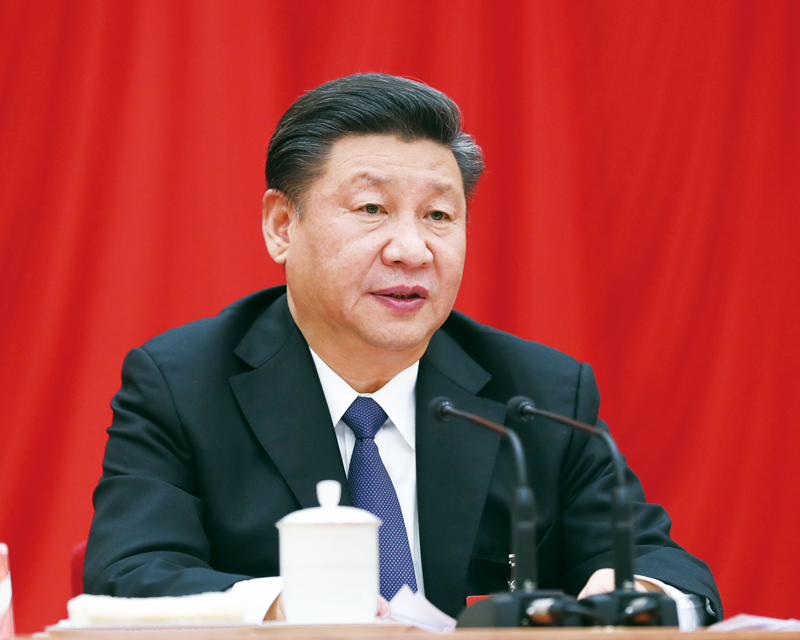
The Third Plenary Session of the 19th Central Committee of the CPC was held in Beijing from February 26 to 28, 2018. General Secretary of the Central Committee Xi Jinping delivered an important speech. Xinhua News Agency reporter Ju Peng/Photo
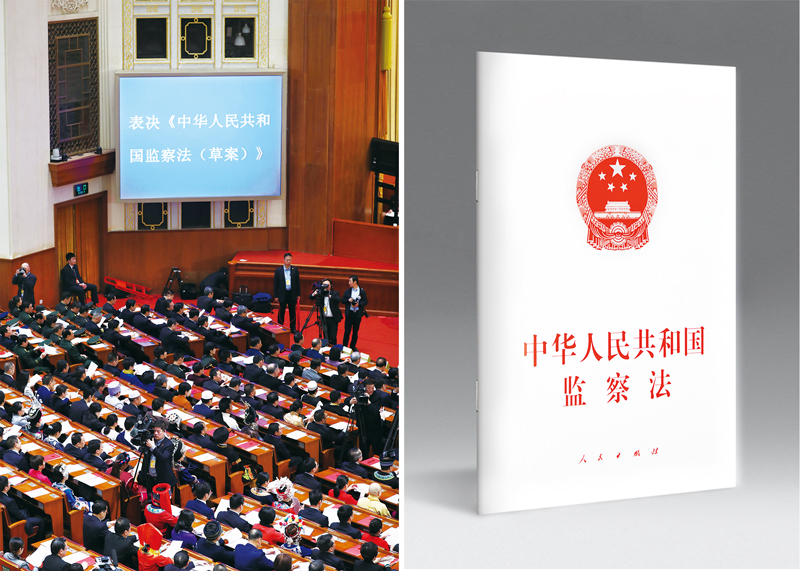
On March 20, 2018, the first session of the 13th National People's Congress held its closing meeting in the Great Hall of the People in Beijing.
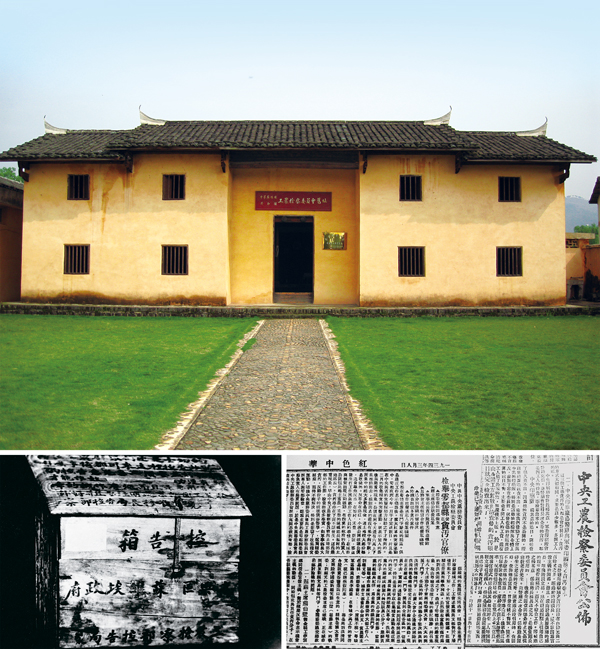
During the Central Soviet Area and Yan'an period, our party explored a set of supervision methods for the Soviet government, border area government, and revolutionary base area people's political organizations and their staff. The above picture shows the former site of the Workers' and Peasants' Procuratorate of the Chinese Soviet Republic in Ruijin, Jiangxi; The left figure below shows the accusation box set up by the Workers' and Peasants' Procuratorate of the Soviet Government in Xingxing County, Jiangxi Province at that time; The image on the right below shows the report by the Red China newspaper on the investigation and prosecution of corruption cases involving the Central Printing Factory and other units, as well as the report on the embezzlement of Soviet staff in Yudu County. Photo provided by the Party History Office of the Ganzhou Municipal Committee of the Communist Party of China in Jiangxi Province
Deepening the reform of the national supervision system is an important deployment to implement the spirit of the 19th National Congress of the Communist Party of China, improve the supervision system of the Party and the state, and promote the modernization of the national governance system and governance capacity. Our collective study on this topic aims to deepen our understanding, enhance confidence, and deepen the reform of the Party's disciplinary inspection system and the national supervision system at a new starting point, providing important institutional guarantees for improving and developing the socialist system with Chinese characteristics in the new era and promoting comprehensive strict governance of the Party.
Since the 18th National Congress of the Communist Party of China, the Party Central Committee has been pondering and planning how to adapt to the new situation of comprehensive and strict governance of the Party. While strengthening supervision in all aspects of the Party, it is necessary to better play the role of supervisory organs, strengthen national supervision, and put public power in the cage of the system. Under the leadership of the Central Committee of the Communist Party of China, the Central Commission for Discipline Inspection organized and coordinated the reform from pilot explorations in Beijing, Zhejiang, and Shanxi to nationwide promotion, and then to the establishment of national and provincial, municipal, and county supervisory commissions, co located with the Discipline Inspection Commission, achieving important phased results in the reform.
1、 The reform of the national supervision system has shown initial results
After a period of effort, the reform of the national supervision system has shown multiple achievements.
Firstly, it is conducive to the centralized and unified leadership of the Party in anti-corruption work. Through institutional and mechanism innovation, we have integrated the anti-corruption responsibilities of administrative supervision departments, anti-corruption prevention institutions, and procuratorial organs, solved problems such as narrow supervision scope, scattered anti-corruption forces, and poor connection between discipline and law in the past, optimized the allocation of anti-corruption resources, and achieved the organic unity of intra party supervision and national supervision, rule of law and party governance.
Secondly, it is conducive to the full coverage of public power supervision. We have included all personnel exercising public power in the scope of unified supervision, solving the problem of asynchronous supervision between the Party and the state in the past, and some personnel exercising public power being outside of supervision, achieving full coverage and no blind spots in public power supervision and anti-corruption.
Thirdly, it is conducive to adhering to the principle of treating both the symptoms and root causes, consolidating and expanding the achievements of the anti-corruption struggle. Since the 19th National Congress of the Communist Party of China, the national disciplinary inspection and supervision organs have fully utilized the governance effectiveness of the new system, gathered their five fingers, launched heavy handed attacks, and fully demonstrated the deterrent effect of not daring to be corrupt. A group of corrupt elements have surrendered themselves, and the comprehensive effect of addressing both the symptoms and root causes has become more prominent.
Practice has proven that the decision of the Central Committee of the Communist Party of China to promote the reform of the national supervision system is completely correct. We need to maintain strategic determination, continue to deepen reforms, promote the integration of disciplinary and law enforcement, effectively connect with the judiciary, promote the legalization and standardization of anti-corruption work, strengthen the deterrence against corruption, tighten the cage against corruption, and enhance the consciousness of not wanting corruption.
2、 Strengthen the supervision of public power
I have said that the power of the state is a 'divine artifact', a sacred thing. Public authority must also be public. As long as public power exists, there must be constraints and supervision. If not put in a cage, public power will be abused. Marx emphasized that all power in socialist countries belongs to the people, and all public officials must work under public supervision. Lenin emphasized the need to enhance the status, standards, and authority of supervisory agencies, establish a supervisory system that includes intra party supervision, people's supervision, and legal supervision, in order to prevent public officials from becoming "detached from the masses, standing above the masses, and enjoying privileges".
Our party has attached great importance to the issue of power supervision since its establishment. During the Central Soviet Area and Yan'an period, our party explored a set of supervision methods for the Soviet government, border area government, and revolutionary base area people's political organizations and their staff. After the establishment of the People's Republic of China, we have made unremitting explorations to strengthen the supervision of public power. After the 18th National Congress of the Communist Party of China, our party has made a lot of exploration and efforts in strengthening supervision of the state machinery and effectively putting public power into the cage of the system, with the aim of ensuring that the power granted by the people is always used to seek happiness for the people.
The original intention of deepening the reform of the national supervision system is to focus on enhancing the full coverage and effectiveness of supervision over public power and public officials, promoting the rule of law in the operation of public power, eliminating the vacuum zone of power supervision, compressing the arbitrary space for the exercise of power, establishing a sound supervision and management mechanism, an effective power constraint mechanism, and a serious accountability mechanism.
National supervision is the most direct and effective supervision of public power, and the first responsibility of the supervisory committee is to "carry out anti-corruption education for public officials, supervise and inspect their lawful performance of duties, impartial use of power, clean governance and professional conduct, and ethical conduct. We must educate and supervise state organs and public officials at all levels to bear in mind that the power in their hands is granted by the Party and the people, and is bounded and controlled from top to bottom, left to right. They must not act arbitrarily, and must use their power impartially, in accordance with the law, with integrity, and for the benefit of the people. We must urge departments, organizations, and individuals who hold public power to strengthen their legal thinking, strictly operate within the scope of the Constitution and laws, exercise their powers strictly in accordance with legal authority and procedures, and never allow any organization or individual to have privileges beyond the law.
We need to strengthen the supervision and restraint of public power, urge departments and organizations that hold public power to reasonably decompose power, scientifically allocate power, strictly enforce responsibilities and authorities, improve the list of rights and responsibilities system, and accelerate the legalization of institutions, functions, authorities, procedures, and responsibilities. We need to closely monitor all aspects of the operation of public power, improve the prevention mechanism for timely detection of problems, and the correction mechanism for precise correction of deviations. We need to manage key people, key areas, key matters, and critical moments, especially by managing one hand well. We must conscientiously implement democratic centralism, improve the "three fold and one major" decision-making and supervision mechanism, make good use of the sharp weapons of criticism and self-criticism, fully mobilize the supervision of superiors over subordinates, between peers, and between subordinates over superiors, and enhance the effectiveness of supervision. We should combine daily supervision with petitions, reports, and inspections, strengthen supervision and inspection of the implementation of problem rectification, and hold accountable those who fail to carry out rectification.
Good cannot be lost, and evil cannot be sustained. We must adhere to the principles of learning from past mistakes, treating illnesses and saving lives, and make good use of the "four forms" of supervision and discipline, focusing on early and small issues, and preventing the spread of small problems. We need to strengthen supervision and discipline, timely discover and investigate problems related to party conduct and discipline, and at the same time strengthen supervision and law enforcement, timely discover and investigate problems related to performing duties in accordance with the law, exercising power impartially, practicing clean governance and ethics, and establish rules for the exercise of power.
It should be emphasized that the purpose of power supervision is to ensure the correct exercise of public power and better promote the performance of duties, responsibilities, and entrepreneurship of cadres. On the one hand, we need to control the dereliction of duty in the misuse and abuse of power, and on the other hand, we need to control the dereliction of duty in not abandoning power. We need to rectify the lack of responsibility, inaction, slow action, and false action, and pay attention to protecting those cadres who dare to take responsibility and take action. We need to clarify those cadres who have been falsely accused and framed in a timely manner, and form a good political ecology of stirring up chaos, promoting clarity, and promoting entrepreneurship.
3、 Improve the disciplinary inspection and supervision system and mechanism
Now, the National Supervisory Commission and the provincial, municipal, and county level supervisory commissions have been established.
Firstly, the reform goals cannot be biased. Deepening the reform of the disciplinary inspection and supervision system is to achieve a comprehensive approach that addresses both the symptoms and root causes. We need to strengthen the deterrence against corruption, maintain a high-pressure situation in punishing corruption, enhance the deterrent effect of supervision and surveillance coverage, and continuously release a strong signal of comprehensive strictness. We need to tighten the cage that cannot be corrupted, combine "immediate change" with "long-term establishment", and form a long-term mechanism that relies on systems to manage power, affairs, and people. To enhance the consciousness of not wanting corruption, guide party members and cadres to firmly uphold their ideals and beliefs, strengthen their sense of purpose, establish a correct worldview, outlook on life, and values, and create a clean and upright political environment and social atmosphere.
Secondly, job functions need to keep up. We must strengthen political supervision, implement daily supervision, rely on forward supervision and proactive supervision, resolutely eliminate formalism and bureaucratic problems such as vague statements, perfunctory appearances, and campaign style hype, maintain the authority and centralized unified leadership of the Party Central Committee, and ensure the implementation of major decisions and deployments of the Party Central Committee.
Thirdly, all rules must be followed. To integrate and standardize the work process of disciplinary inspection and supervision, and strengthen the supervision and restraint of internal power operation; Establish a unified decision-making and integrated operation mechanism for disciplinary and law enforcement work, combining the application of discipline and the application of laws; Promote the concretization, proceduralization, and institutionalization of the dual leadership system for disciplinary inspection and supervision work, and drive the entire disciplinary inspection and supervision system to improve the quality of performance.
Fourthly, supporting regulations need to keep up. We need to formulate laws and regulations that are complementary to the Supervision Law, concretize the principled and general provisions in the Supervision Law, and form a comprehensive, scientific, standardized, and effective regulatory system.
Fifth, coordination mechanisms need to keep up. We need to strengthen leadership in the reform of the disciplinary inspection and supervision system, enhance cross departmental and cross regional coordination internally, and strengthen international anti-corruption efforts for fugitive and stolen goods externally. We must firmly support the Commission for Discipline Inspection and Supervision in exercising its powers and create favorable conditions for it to fulfill its duties. We need to timely study and solve the problems encountered in the reform of the disciplinary inspection and supervision system, so that anti-corruption work can be more coordinated and efficient in decision-making, deployment and command, resource and force integration, and the use of measures and means. Disciplinary inspection and supervision institutions should leverage the advantages of co location, promote the coordination and connection of disciplinary supervision, supervisory supervision, dispatched supervision, and inspection supervision, and effectively integrate intra party supervision with state organ supervision, democratic supervision, judicial supervision, mass supervision, and public opinion supervision, placing power under strict supervision.
4、 Standardize and correctly exercise the power of national supervision
Disciplinary inspection and supervision organs shoulder the heavy trust of the Party and the people, and must bear in mind the political requirement that forging iron must be self imposed. Since the 18th National Congress of the Communist Party of China, I have repeatedly talked about "who will supervise the discipline inspection commission" and prevent "darkness under the lamp", which is the issue that supervisors must accept supervision. This applies equally to institutions and comrades exercising supervisory power. The disciplinary inspection and supervision organs should use the Marxist flashlight to shine not only on others but also on themselves, and not only on others but also on themselves. Here, I would like to remind again that disciplinary inspection and supervision agencies are not natural safes. Their supervisory power is a double-edged sword, and they must also be locked in the cage of the system. They must consciously accept the supervision of the Party and the people, exercise their power with great caution, and strictly abide by discipline and the law.
Those who are good at banning should be banned first and then passed on to future generations; those who are not good at banning should be banned first and then passed on to future generations. "Discipline inspection and supervision cadres are at the forefront of promoting integrity, discipline, and anti-corruption, constantly facing the test of corruption and anti-corruption, and are easily" hunted down ". What other state organs and public officials are required to do, discipline inspection and supervision organs and cadres must first do, resolutely not abuse their power, seek personal gain, especially not engage in selective supervision, arbitrary disciplinary investigations, and arbitrary accountability and disposal.
Since the 18th National Congress of the Communist Party of China, the disciplinary inspection and supervision organs and cadres have done a good job in implementing the decisions and deployments of the Party Central Committee. It's not difficult to set a good example for one thing at a time, but it's difficult to set a good example for everything at all times. Disciplinary inspection and supervision organs and cadres must always be self disciplined, hold the bottom line, tighten the institutional cage, and strengthen self-restraint. The Central Commission for Discipline Inspection and the National Supervisory Commission should take the lead in strengthening the political construction of the Party, enhancing the "four consciousnesses", strengthening the "four confidences", and always consciously maintaining a high degree of consistency with the Party Central Committee in ideology, politics, and action. In the face of major issues of right and wrong, they should dare to show their swords and struggle, take the lead in strengthening self supervision, consciously accept internal and social supervision, timely clean up the courtyards and doors, and strive to build a model institution that reassures the Party Central Committee and satisfies the people. The vast number of disciplinary inspection and supervision cadres should be loyal guardians of the Party and the people, firmly uphold their ideals and beliefs, improve their political abilities, strengthen self-restraint, continuously enhance their professional abilities, strengthen their disciplinary and legal thinking, especially their procedural awareness, actively accept organizational supervision, and set an example in abiding by laws and regulations and being strict with themselves. (This is a speech by General Secretary Xi Jinping at the 11th collective study session of the 19th Central Political Bureau on December 13, 2018.)